

Complete Curtain Installation Guide: What to Know Before Measuring, Buying Hardware, or Drilling


Installing curtains looks straightforward until you stand in front of a wide living room window or a recessed gypsum ceiling box with a drill in hand. Choosing the wrong bracket spacing, miscalculating fabric fullness, or using standard plastic plugs in hollow drywall can lead to sagging rods, light leaks around the edges, or brackets pulling loose every time heavy blackout drapes are drawn.
Whether you are moving into a new villa, upgrading a bedroom for better sleep and heat insulation, or dressing wide Majlis windows, planning your setup before buying hardware saves time, money, and wall repairs. If you prefer an experienced technician to handle laser-level alignment, ceiling track mounting, and heavy-duty anchoring for you, explore our professional curtain installation service in Riyadh.
1. What Homeowners Check First Before Installing Curtains
Before ordering curtain panels or calling an installer, walk through five practical checkpoints for each window in your home:
- Where Will the Hardware Mount (Ceiling vs. Wall)? Look above your window frame. Many modern apartments and villas feature recessed gypsum curtain boxes (pelmets) built into the ceiling perimeter. If you have a recessed cove, a ceiling-mounted track hides the hardware completely and blocks light from spilling over the top. If you have a flat wall without a pelmet, you can choose between a high wall-mounted decorative rod or a sleek ceiling track.
- How Heavy Is the Fabric Setup? A single lightweight sheer voile weighs very little, whereas a double-layer setup, combining thick thermal blackout lining, velvet or linen drapes, and a sheer layer puts substantial downward pull on every bracket. Hardware must be matched to the wet/full weight of the fabric, not just the width of the window.
- Is There Enough Clearance for Windows and Doors to Open? Check whether your window opens inward (tilt-and-turn) or slides horizontally, and note if an AC unit, air vent, or wardrobe sits near the window frame. The bracket projection (how far the rod sticks out from the wall) must allow the window sash to open smoothly without catching on the fabric.
- Are You Layering Sheer and Blackout Curtains? In sunny climates like Riyadh, single-layer curtains rarely give you both daytime brightness and nighttime privacy. Most living rooms and bedrooms require a double-track or double-rod system so you can keep sheers closed during the day for filtered natural light and pull blackout drapes shut at night or during peak afternoon heat.
- Do You Need Manual, Corded, or Motorized Operation? Standard windows under 2.5 meters work well with hand-drawn wands or smooth gliders. However, for double-height Majlis windows, heavy velvet drapes, or wide patio sliding doors, a motorized curtain track prevents uneven tugging on the fabric and lets you open or close curtains via remote control or smart-home app.
2. How to Measure Windows Like an Interior Designer
One of the most common reasons curtains look cheap or cramped is mounting the rod directly on the edges of the window frame. Professional installers use specific visual proportions to make windows appear wider and ceilings feel higher:
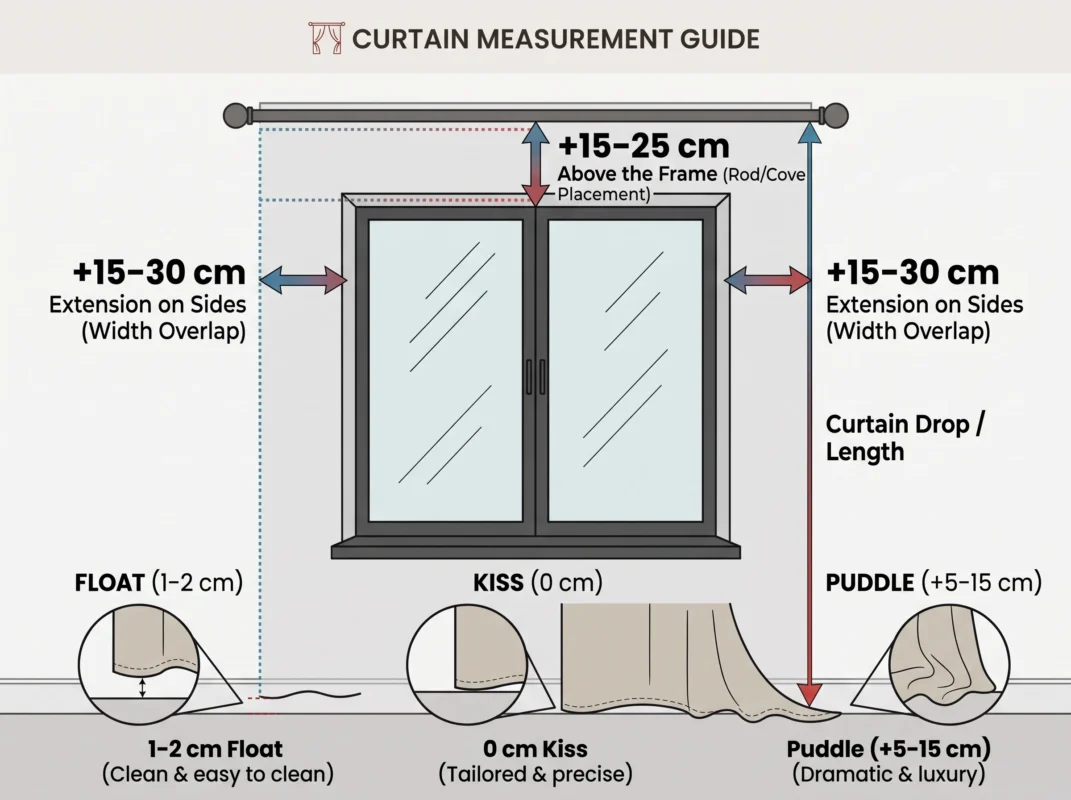
Step-by-Step Measuring Rules
- Height Placement (Add 15 to 25 cm Above the Frame): Never mount a rod right on top of the window trim unless a beam or AC duct blocks the space above it. Mounting 15 to 25 cm above the frame—or directly onto the ceiling—draws the eye upward and makes standard rooms feel noticeably taller.
- Width Extension (Add 15 to 30 cm on Each Side): Extend your track or rod 15 to 30 cm past both the left and right edges of the window frame. This “stack-back” space allows the curtain panels to rest against the wall when fully open rather than covering your window glass and blocking daylight.
- Fabric Fullness (2× to 2.5× Track Width): A flat piece of fabric stretched across a window looks like a bedsheet. For rich, uniform folds (especially with wave/ripple-fold or pinch-pleat headings), your total curtain fabric width should be 2 to 2.5 times the total length of the track or rod.
- Drop Length (Floor Clearance): Always measure from the exact point where the track or rod ring sits down to the floor in three spots (left, center, and right), as floors and ceilings are rarely 100% level:
- 1–2 cm Above the Floor (Float): The most practical choice for bedrooms and everyday living areas, keeps hems clean and glides smoothly without dragging.
- 0 cm Floor Kiss: The fabric lightly brushes the floor for a custom-tailored, formal look in living rooms and Majlis areas.
- 5–10 cm Puddle: Extra fabric pooling on the floor for dramatic luxury styling, best used on decorative side panels that aren’t opened and closed daily.
3. Curtain Tracks vs. Curtain Rods: Choosing the Right System
Different curtain headings and room styles call for different hardware systems. Here is how the four main options compare:
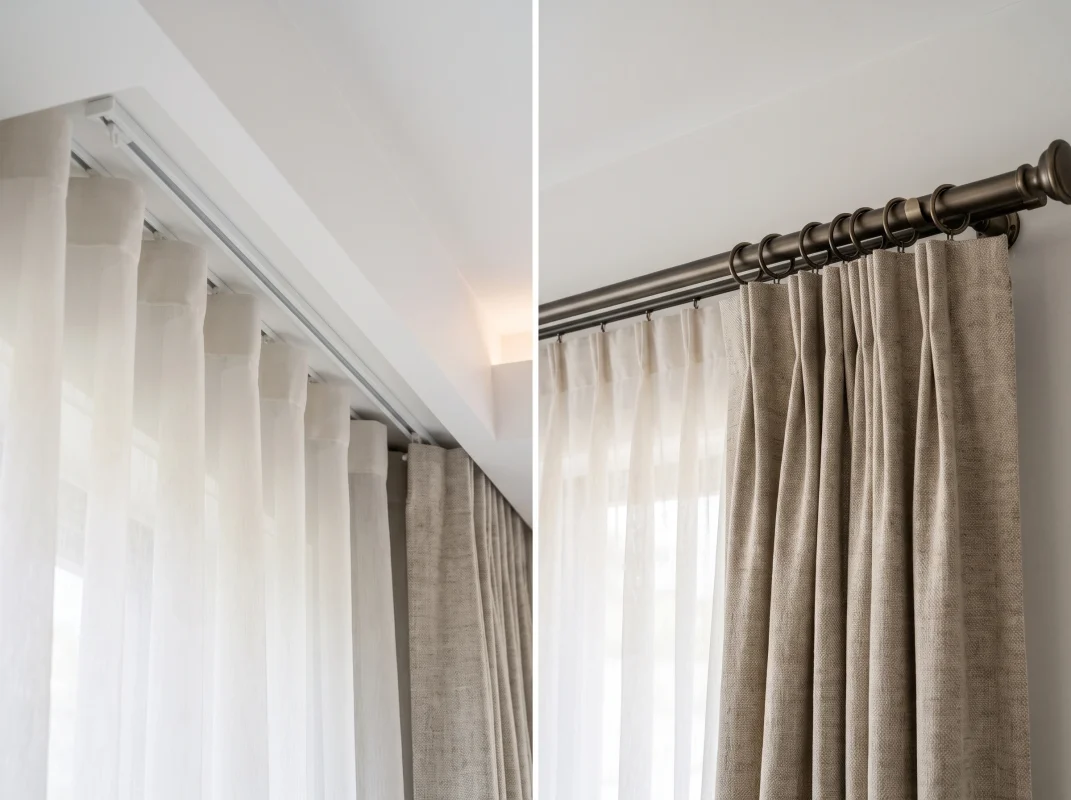
| Hardware System | Compatible Curtain Styles | Best Rooms & Applications | Pros & Considerations |
| Ceiling-Mounted Aluminum Tracks | Wave (ripple-fold), American pinch-pleat, pencil-pleat, and hospital/privacy tracks | Recessed gypsum curtain boxes, floor-to-ceiling windows, and modern minimalist spaces | Smooth, quiet gliding; zero top light gap; supports heavy multi-layer drapes when properly anchored |
| Single Decorative Rods | Eyelet (grommet), tab-top, back-tab, and ring-clip curtains | Guest bedrooms, studies, and windows that only need one fabric layer | Visible metallic or wood finials add decorative style; easy to slide panels off for washing |
| Double Rods or Dual Tracks | Sheer voile (back layer) + heavy blackout or decorative drape (front layer) | Master bedrooms, family living rooms, and sun-facing windows | Full control over daylight, heat insulation, and privacy throughout the day |
| Motorized Curtain Tracks | Wave-fold and pinch-pleat drapes (single or dual track) | Tall double-height Majlis windows, wide sliding glass doors, and smart homes | Remote, wall-switch, or voice/app operation; requires a nearby power outlet or rechargeable battery motor |
4. Wall & Ceiling Surfaces: What Anchors Are Needed?
Even the strongest steel rod or aluminum track will fail if the wall anchors cannot hold the load. In residential and commercial buildings across Riyadh, installers encounter four main mounting surfaces each requiring specific hardware:
1. Concrete and Cement Block Walls
Exterior walls and structural headers in villas and apartments are typically poured concrete or solid cement block. While concrete holds tremendous weight, standard household drills often struggle against steel rebar or dense aggregate. Proper mounting requires a rotary hammer drill with masonry bits and high-grade expansion plugs so brackets never wiggle loose over time.
2. Gypsum Board (Drywall) Ceilings & Recessed Curtain Boxes
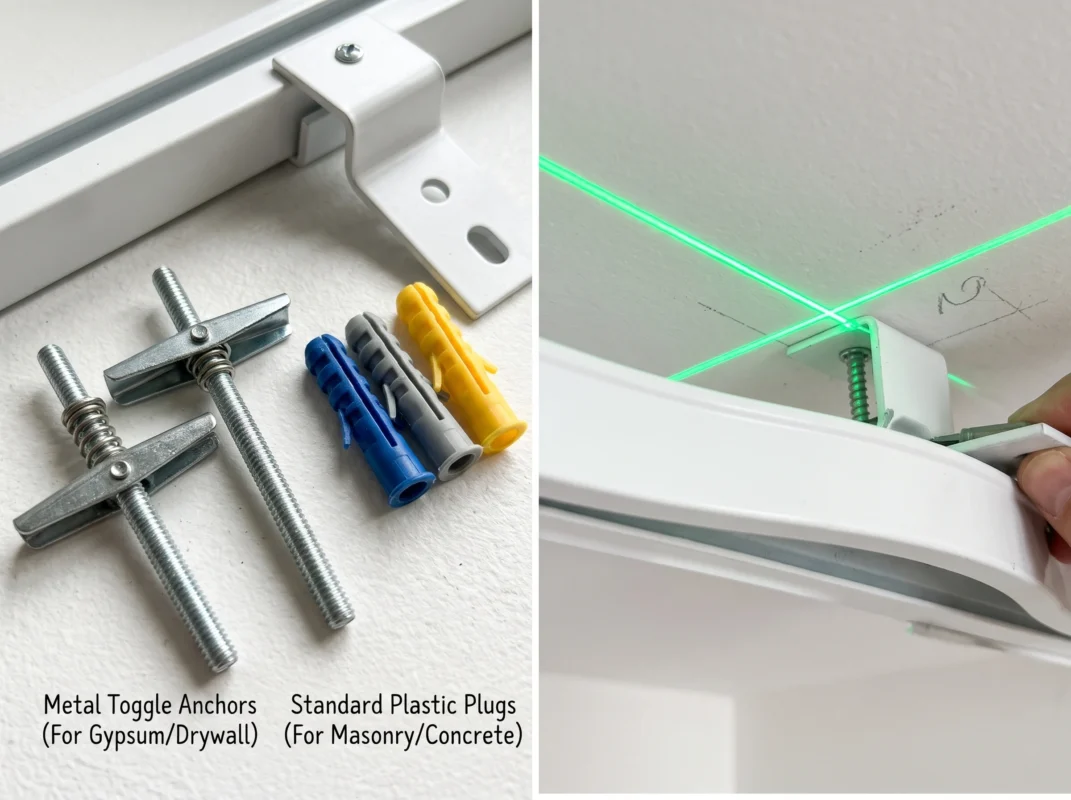
Modern false ceilings and recessed curtain pelmets are built from gypsum board over a metal grid. Standard plastic wall plugs will pull straight out of gypsum once heavy blackout curtains are hung and tugged daily. Secure gypsum mounting requires:
- Locating and screwing directly into the internal galvanized steel channels above the gypsum board, or
- Using heavy-duty metal toggle anchors / butterfly bolts that open behind the gypsum sheet to distribute weight across a wide surface area.
3. Wooden Pelmets and Decorative Wall Cladding
If your window has a built-in wooden valance box or decorative WPC/wood wall paneling, brackets must either bite into solid structural timber or use extended fasteners that pass completely through the decorative cladding into the concrete wall behind it.
4. Wide Spans (Windows Over 2.5 to 4+ Meters)
Any curtain rod wider than 180–200 cm will visibly bow in the center unless supported by a center bracket. For ceiling tracks spanning 3 to 5 meters across wide living room or Majlis windows, brackets should be spaced evenly every 80 to 100 cm along the entire rail to ensure smooth glider movement and zero sagging.
5. Seven Common Mistakes That Ruin Curtain Installations
- Buying the Rod Before Measuring Stack-Back Space: Ordering a rod the exact width of the window forces your open curtains to cover 30% of the glass on each side.
- Mounting Eyelets on a Ceiling Track: Eyelet (grommet) curtains require a cylindrical pole—they cannot hang on flat ceiling tracks, whereas wave and pinch-pleat curtains work seamlessly on tracks.
- Eyeballing Bracket Alignment Without a Laser Level: A slight 5 mm difference between left and right brackets becomes obvious once vertical striped or floor-length curtains hang down to the floor tiles.
- Drilling Into Hidden Electrical Conduits: Recessed gypsum boxes frequently contain LED strip transformers, spotlight wiring, or electric shutter cables. Always scan the ceiling line before drilling.
- Forgetting Thermal & Blackout Lining for West-Facing Windows: Direct afternoon sun fades decorative fabrics quickly and heats up bedrooms; pairing sheer curtains with a dedicated blackout layer protects your furniture and lowers AC load.
- Using Flimsy Plastic Gliders on Heavy Drapes: Heavy velvet or lined linen curtains require wheeled ball-bearing track gliders so the fabric glides effortlessly without jamming.
- Skipping Steaming After Hanging: Brand-new curtains arrive folded with deep packaging creases; steaming panels once they hang on the track allows the pleats to drape naturally.
Want Precision Laser-Aligned Curtain Installation Without the Hassle?
If you want your tracks, rods, or motorized systems mounted securely into concrete walls or gypsum ceilings with exact measurements, clean dust-free drilling, and smooth gliding, our technicians handle residential and commercial setups across all Riyadh neighborhoods. View our services and book an appointment on our curtain and track installation service page in Riyadh.
Frequently Asked Questions
Choose ceiling-mounted tracks if you have a recessed gypsum curtain box, want floor-to-ceiling wave curtains, or want to eliminate light gaps above the window. Choose wall-mounted decorative rods if you prefer visible metallic/wood finishes with finials or are hanging eyelet curtains.
Add 15 to 30 cm on each side (30 to 60 cm total wider than the window frame) so the curtains can stack neatly against the wall when open without blocking natural light.
Yes, provided the tracks are fastened into the gypsum ceiling’s internal metal support framing or secured with heavy-duty toggle anchors rated for ceiling loads rather than standard plastic drywall plugs.
For rods, use two end brackets for spans up to 180 cm, and add a center support bracket for anything wider. For ceiling tracks, install mounting brackets every 80 to 100 cm along the length of the rail to prevent bowing under heavy drapes.
A double-track or double-rod setup combining daytime sheer voiles with a dense triple-weave or coated blackout curtain mounted 15–20 cm above and beyond the window frame blocks maximum light and reduces heat transfer.
A standard single window takes 20 to 40 minutes, while outfitting an entire apartment or villa with multiple double-layer tracks, gypsum ceiling anchoring, and laser leveling typically takes 1.5 to 3 hours.