

TV Wall Mounting vs TV Stand: Which Is Better for Your Home?

When setting up a new television, one of the first decisions is whether to mount it directly on the wall or use a TV stand. Both options can create a clean and practical setup, but they work differently depending on your room, wall type, available space, and how you use the TV.
A wall-mounted TV can create a streamlined appearance and free up floor space, while a floor TV stand can provide greater flexibility without requiring permanent wall mounting. The right choice depends less on which option is universally “better” and more on which solution suits your particular room.
In this guide, we compare TV wall mounting and TV stands, including their installation requirements, flexibility, appearance, space requirements, and suitability for different types of homes and commercial spaces.
TV Wall Mounting: How Does It Work?
Wall mounting involves securing a suitable TV bracket to the wall and attaching the television to the bracket. The type of bracket can vary depending on how you want to position the screen.
A fixed TV mount keeps the screen in one position and provides a close-to-the-wall appearance. A tilting mount allows the screen to be angled vertically, while a full-motion mount can provide additional movement and viewing flexibility.
The mounting bracket must be compatible with the TV’s size, weight, and VESA mounting pattern. The wall itself also needs to be suitable for the installation, particularly when dealing with larger televisions.
For customers who want professional mounting, our TV Installation in Riyadh service covers different TV sizes and installation surfaces.
Advantages of Wall Mounting a TV
Saves Floor Space
One of the biggest advantages of wall mounting is that it removes the need for a large piece of furniture underneath the television. This can be particularly useful in smaller rooms where floor space is limited.
A wall-mounted TV can also make the area around the screen feel more open, especially when the rest of the room has a minimalist design.
Creates a Clean Appearance
A properly installed wall-mounted TV can create a simple and modern appearance. When cables are also managed correctly, the installation can look much cleaner than a setup with visible wires and unnecessary furniture.
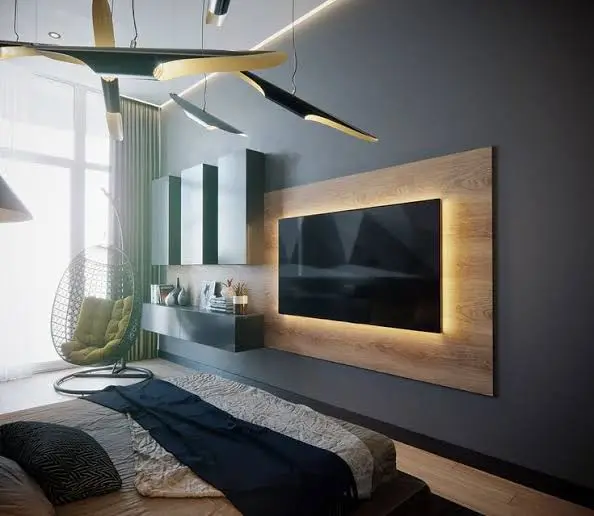
This is especially effective when the television is incorporated into a decorative TV wall, wood panel, or other interior feature.
Useful for Fixed Room Layouts
If your furniture arrangement is unlikely to change, wall mounting can provide a permanent viewing position. Once the TV is correctly positioned and installed, the setup can remain in place without taking up floor space.
This can work particularly well in living rooms, bedrooms, majlis areas, and dedicated entertainment spaces.
What Should You Consider Before Wall Mounting?
Wall mounting is not simply a matter of drilling holes and attaching a bracket. The installation surface and television specifications should be considered beforehand.
Wall Type
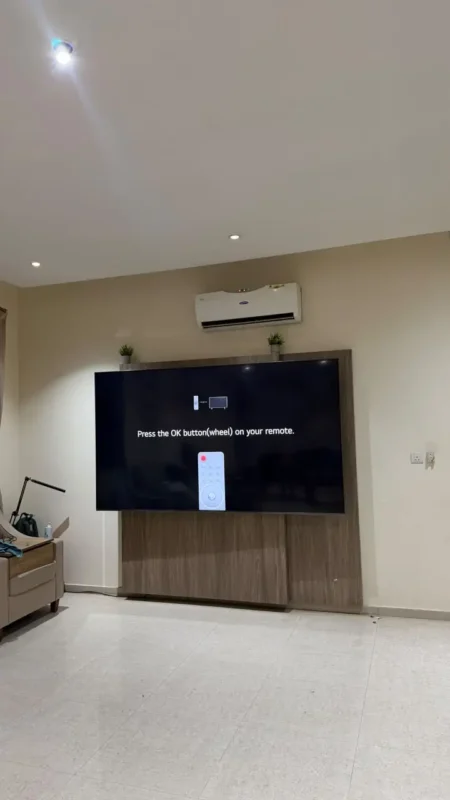
Different surfaces require different installation considerations. Standard solid walls, gypsum board, marble, and wood-panel walls may require different approaches.
For example, a decorative wall may have a finish or construction that needs to be considered before drilling. Large televisions also require particularly careful planning because of their weight and size.
TV Size and Weight
Always check the television’s weight and the mounting bracket’s capacity. A larger screen may also require more careful handling during installation.
At Masheera Interiors, our installation pricing is based partly on TV size because larger screens require additional care when carrying, positioning, and leveling them.
Cable Management
A wall-mounted TV can look excellent from the front, but visible cables can reduce the overall appearance. Before installation, consider where the power cable, HDMI cables, streaming devices, soundbar, and other equipment will be positioned.
If you are planning a complete wall-mounted setup, cable management should be considered as part of the installation rather than as an afterthought.
What Is a TV Stand?
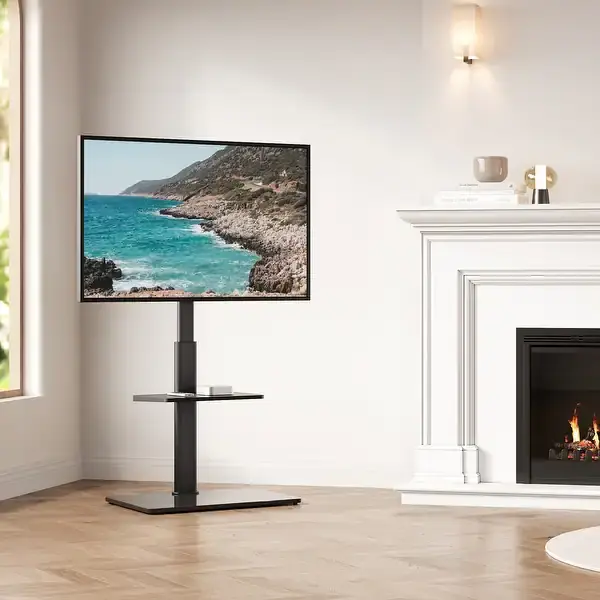
A TV stand supports the television without requiring it to be permanently attached to the wall. Depending on the design, it can be a traditional TV console, a floor stand, a mobile TV stand, or a tripod-style stand.
Some floor stands use a central support column and base, while mobile models include wheels that allow the television to be moved when necessary. Traditional TV consoles can also provide storage for media equipment and accessories.
The main advantage is flexibility. You can change the position of the TV without having to remove a wall-mounted bracket or repair mounting points.
If you want to compare different designs, explore our TV Stands collection.
Advantages of Using a TV Stand
More Flexibility
A TV stand can be a better option when you expect your room layout to change. You can reposition the television and, depending on the model, move it between different areas.
This flexibility can be particularly useful in rented apartments or rooms where the furniture arrangement changes regularly.
No Permanent Wall Mounting
A floor TV stand can eliminate the need to drill into the wall. This can be useful when you do not want to make permanent changes to the property or when the wall is not suitable for the installation you require.
It can also be useful when you want to position the TV in front of a particular area without modifying the wall.
Different Styles and Functions
TV stands are available in a wide range of designs. A fixed floor stand can provide a simple setup, while an adjustable or swivel model can provide more viewing flexibility.
Mobile TV stands add another level of practicality because they can be moved when the room needs to be used for another purpose.
TV Stand vs Wall Mount: Which Should You Choose?
There is no single solution that works for every room. The following factors can help you decide.
| Factor | TV Wall Mount | TV Stand |
|---|---|---|
| Floor space | Excellent for saving space | Requires some floor space |
| Wall drilling | Required | Usually not required |
| Flexibility | Usually more permanent | Easier to reposition |
| Appearance | Clean, streamlined | More furniture-focused |
| Storage | Requires separate furniture | Some consoles provide storage |
| Mobility | Limited | Mobile models are available |
| Wall suitability | Important | Less dependent on wall structure |
| Installation | Requires proper mounting | Usually simpler depending on model |
The best choice depends on your priorities rather than simply the size of your TV.
Which Is Better for a Small Apartment?
For a small apartment, both options can work well.
A wall-mounted TV can save valuable floor space and leave more room for furniture. This can make a smaller living area feel less crowded.
A floor TV stand, however, can be useful when you are renting, when you do not want to drill into the wall, or when you expect to move the television in the future. A slim floor stand can provide support without requiring a large TV cabinet.
Which Is Better for a Living Room?
The right choice depends on the overall furniture arrangement and the style you want to achieve.
A wall-mounted TV works well when you want a clean entertainment wall or when the TV is part of a larger decorative feature. A TV console can be more suitable if you need storage for gaming systems, receivers, media players, or other equipment.
A floor TV stand can provide a middle ground by offering a dedicated support structure without requiring the television to be permanently fixed to the wall.
What About Bedrooms?
Bedrooms often benefit from flexibility because the viewing position may differ from that of a living room.
A wall-mounted TV can keep furniture to a minimum, while an adjustable floor stand can allow you to position or swivel the screen according to where you are sitting or lying.
Before choosing, consider the viewing height, available floor space, and whether you need to change the TV’s position.
TV Stands vs Wall Mounts for Offices and Commercial Spaces
For offices, meeting rooms, classrooms, restaurants, and other commercial environments, the decision often depends on whether the TV needs to remain in one position.
A wall-mounted TV can be appropriate for a permanent display, presentation screen, or meeting-room setup. A mobile TV stand can be more useful when the display needs to be moved between different areas.
In commercial environments, stability, cable management, viewing height, and ease of repositioning should all be considered before choosing the setup.
What About Large TVs?
Large TVs require more attention regardless of whether you choose a wall mount or a stand.
For a wall-mounted installation, the bracket must support the TV’s weight and match its VESA pattern, while the wall and mounting method need to be suitable for the installation.
For a floor stand, the stand must be rated for the television’s size and weight and provide an appropriately stable base.
Large televisions can also be more difficult to carry and position safely. This is one reason our TV installation pricing increases for larger screens. Proper handling and accurate leveling become increasingly important as screen size increases.
Can You Use a TV Stand Instead of Wall Mounting?
Yes. A properly designed TV floor stand can be a complete alternative to wall mounting when it is compatible with the television.
This can be especially useful when you do not want to drill into the wall, when the wall is unsuitable, or when you want the flexibility to move the television later.
Before purchasing, check the stand’s supported TV size, maximum weight, VESA compatibility, and any height or movement specifications.
Can You Change From a TV Stand to Wall Mounting Later?
In many situations, yes. A TV stand does not prevent you from choosing wall mounting later.
For example, you may initially use a floor stand in a rented property and later choose to mount the TV when you move into a permanent home.
If you make the change, the wall, bracket, TV weight, VESA pattern, and cable-routing requirements should be checked before installation.
Which One Should You Choose?
Choose a TV wall mount if your priorities are saving floor space, creating a streamlined appearance, and having a fixed viewing position.
Choose a TV stand if you want flexibility, do not want permanent wall mounting, or may need to reposition the television. A mobile or adjustable stand can provide even more flexibility when required.
For some homes, the answer may be both. You might use a wall-mounted TV in the living room while using a floor stand in a bedroom, office, or another room where flexibility is more important.
Conclusion
The choice between a TV stand and wall mounting ultimately comes down to your room, wall type, TV size, furniture layout, and how you want to use the television.
Wall mounting can provide a clean, space-saving installation, while a TV stand offers flexibility and avoids the need for permanent wall mounting. Neither option is automatically better for every home.
Before making your decision, check the TV’s size, weight, VESA pattern, viewing height, and the available space. Then choose the setup that provides the right combination of stability, practicality, appearance, and flexibility.