

How High Should a TV Be Mounted on the Wall?

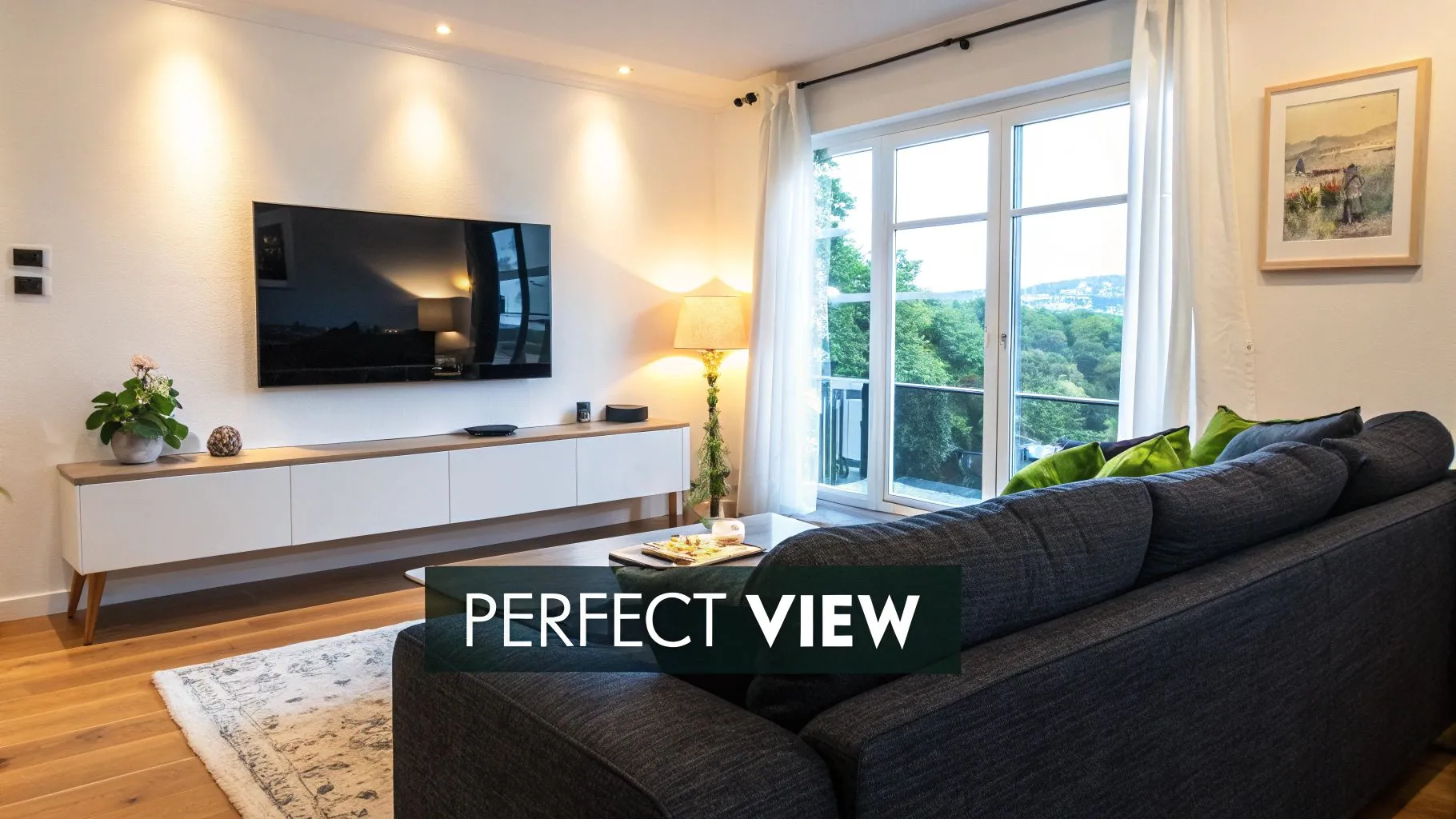
Mounting a TV at the right height can make a significant difference to your viewing experience. A screen that is positioned too high may force you to look upward for long periods, while one mounted too low can feel uncomfortable or interfere with furniture and the overall layout of the room.
There is no single mounting height that works for every television or every room. The ideal position depends on the TV size, seating height, viewing distance, room layout, and whether the screen is being installed in a living room, bedroom, majlis, office, or another space.
The goal is to position the television so that the main viewing area feels natural and comfortable while keeping the installation secure and visually balanced.
What Is the Ideal Height for a Wall-Mounted TV?
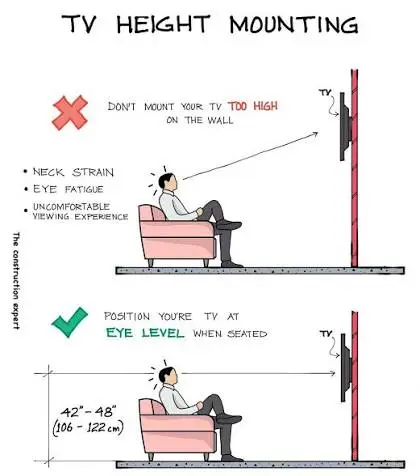
For most living-room setups, the center of the TV screen should be approximately at the viewer’s eye level when seated. This is a useful starting point because it reduces the need to constantly look upward or downward while watching.
The exact measurement will vary depending on the height of your sofa or seating and the size of the television. A larger screen may extend considerably above and below its center point, so measuring only from the bottom of the TV can be misleading.
Instead, determine where the center of the screen will sit once the TV is mounted, then compare that position with the normal seated eye level. This approach generally produces a more comfortable and balanced installation.
How Do You Measure the Correct TV Mounting Height?
Start by measuring the height from the floor to the viewer’s eyes while sitting in the normal viewing position. This gives you a practical reference point for the center of the television.
Next, measure the height of your TV. Divide the TV’s height by two to find the approximate distance from the bottom of the screen to its center. You can then use the desired screen-center height to determine where the bottom edge of the television will sit.
For example, if the center of the screen should be around your seated eye level, the bottom of a large TV will naturally sit lower than the bottom of a smaller TV. This is why mounting every television at the same bottom-edge height does not necessarily produce the same viewing experience.
Before drilling, it is also worth holding or temporarily positioning the TV at the intended height and checking it from your normal seating position.
Does TV Size Affect Mounting Height?
Yes. TV size can affect how high the bottom and top of the screen sit even when the center of the screen is positioned at the same height.
A 55-inch television has considerably less vertical height than a 85-inch television. If both are mounted with their bottom edges at exactly the same height, the larger screen will extend much higher into the room.
For larger televisions, positioning the center of the screen becomes particularly important. This helps avoid mounting the screen unnecessarily high simply because the TV itself is large.
Large TVs also require more careful handling during installation. At Masheera Interiors, our TV installation pricing increases for larger screens because carrying, positioning, and accurately leveling a large television requires additional care.
TV Mounting Height for a Living Room
The living room is usually the easiest environment in which to apply the eye-level approach because viewers are normally seated on a sofa or chair.
Start with the normal seating position rather than the wall itself. Consider how high your eyes are when comfortably seated, then position the center of the TV around that level.
The height of the TV console or other furniture underneath the screen also needs to be considered. If the television is mounted above a console, leave enough space between the furniture and the screen without unnecessarily raising the TV.
If your living room includes a decorative TV wall, the visual design can also influence the final position. The screen should be properly aligned with the surrounding décor while still maintaining a comfortable viewing height.
How High Should a TV Be Mounted in a Bedroom?
Bedroom installations can require a different approach because viewers may watch television while sitting or lying on a bed.
If the TV is primarily viewed while lying down, the screen may need to be positioned differently from a living-room television. In some bedrooms, a tilting bracket can help adjust the viewing angle toward the bed.
The available wall space, bed height, viewing distance, and position of the viewer should all be considered before choosing the final height.
Rather than following a fixed measurement, consider how the television will actually be used. A comfortable viewing position is more important than making every room follow exactly the same installation height.
How High Should a TV Be Mounted in a Majlis?
A TV in a majlis or larger sitting area may be viewed from several seating positions rather than one fixed sofa.
In this situation, the installer should consider the overall seating arrangement and the average viewing position. Mounting the TV too high can become uncomfortable for people seated closer to the screen, while mounting it too low may conflict with furniture or decorative elements.
If the TV is installed as part of a decorative TV wall, the surrounding design should also be considered. Accurate leveling becomes particularly noticeable when the television is surrounded by straight lines, panels, marble, or other architectural features.
What About TV Installation in an Office or Meeting Room?
Office and meeting-room televisions are often used for presentations, video conferences, signage, or shared viewing rather than conventional entertainment.
The appropriate height can therefore depend on whether people are normally seated, standing, or moving around the room. A display used primarily for presentations may need to be positioned differently from a television in a private living room.
Viewing distance should also be considered, especially when the screen is large. The TV should be visible to everyone who needs to use it without forcing people to look unnecessarily upward.
For professional installation and accurate positioning, you can learn more about our [TV Installation in Riyadh] service.
Should a TV Be Mounted Above a TV Console?
A TV can be mounted above a console, but the available space between the furniture and the screen should be carefully considered.
The console should not force the TV unnecessarily high. If the furniture is already tall, mounting the television directly above it can place the center of the screen well above a comfortable viewing position.
Measure the furniture first and determine where the TV’s bottom edge will sit. Then check the resulting screen center from the main seating position.
The objective is to create enough visual separation between the console and TV without sacrificing comfortable viewing height.
Should You Mount a TV Higher Above a Fireplace?
Mounting a television above a fireplace is a common design choice, but it can create a height problem.
A fireplace often places the bottom of the TV significantly higher than the ideal seated viewing position. This means viewers may have to look upward for extended periods, which can be less comfortable than a conventional wall-mounted setup.
Before choosing this location, consider the actual viewing height rather than simply whether the television fits above the fireplace. You should also consider the heat produced by the fireplace and whether the TV manufacturer’s installation requirements allow the proposed placement.
If another wall provides a more comfortable viewing position, it may be worth considering that option instead.
How Far Should You Sit From a Wall-Mounted TV?
Mounting height and viewing distance should be considered together.
A large television viewed from very close range can feel overwhelming, while a smaller screen positioned too far away may be difficult to see comfortably. Your seating arrangement and TV size should therefore be considered when planning the installation.
There is no single viewing distance that works for every television because screen resolution, size, personal preference, and room layout all affect the experience.
Before mounting the TV, sit in the normal viewing position and consider whether the screen size and location feel appropriate for the room.
Should the TV Be Perfectly Level?
Yes. Accurate leveling is one of the details that can make a professional TV installation look noticeably better.
Even a small tilt can become obvious when the television is mounted against a straight wall, decorative panels, marble, or a TV décor feature. The effect is especially noticeable when the surrounding design contains horizontal or vertical lines.
At Masheera Interiors, we take TV leveling seriously and check the screen position during installation so that the finished television sits straight and properly aligned.
What Other Factors Should You Consider Before Mounting a TV?
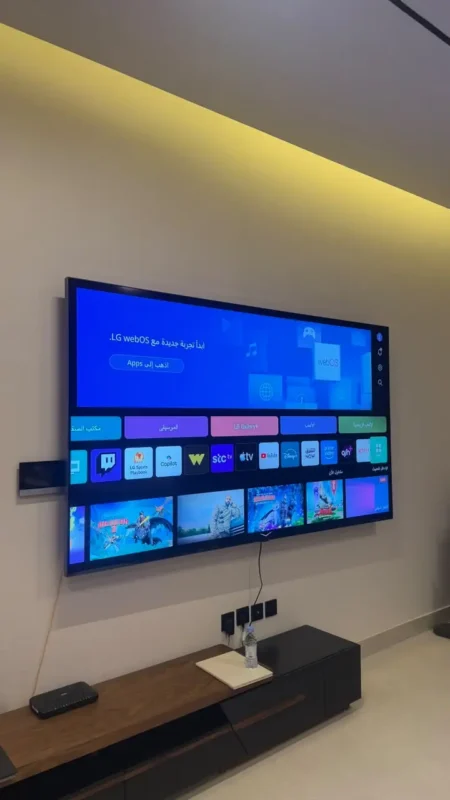
Mounting height is only one part of a successful TV installation. Before drilling, check the TV’s weight, VESA mounting pattern, bracket compatibility, wall construction, cable routing, and the location of nearby power outlets.
The wall surface also matters. Standard walls, gypsum board, marble, and wood-panel installations can have different requirements, so the mounting method should be appropriate for the actual installation surface.
It is also worth planning the position of connected equipment such as soundbars, gaming consoles, receivers, and streaming devices before the final installation. This can help prevent unnecessary cable clutter later.
What Is the Best Height for Your TV?
The best mounting height is the one that provides a comfortable viewing position for the people who will use the television most often. For many living-room installations, positioning the center of the screen around seated eye level is a useful starting point.
However, room layout, seating height, TV size, furniture, wall design, and viewing habits can all change the final position. Avoid relying on a single fixed measurement without considering the complete setup.
If you are unsure, it is better to measure and assess the installation position before drilling. A few minutes of planning can make a significant difference to the final result.
Professional TV Installation in Riyadh
Correct height is only one part of a properly installed television. The bracket needs to be suitable for the TV, the wall needs to be assessed, the screen needs to be handled carefully, and the final position should be accurately leveled.
At Masheera Interiors, we provide TV installation in Riyadh for standard and large televisions, including installations on standard walls, TV décor, gypsum board, marble, and wood panels. We focus on careful drilling, accurate leveling, quick response, and cleaning the work area after installation.
If you are ready to install your television, visit our TV Installation in Riyadh service page to learn more about our installation options and pricing.
Conclusion
Choosing the correct TV mounting height is not simply about following a number on a measuring tape. The most important consideration is how the television will be viewed in the room, including the seating position, screen size, viewing distance, furniture, and overall layout.
For most seated viewing environments, starting around eye level is a practical approach. From there, adjust the position according to the room and the specific TV setup rather than forcing every installation to use the same height.
A carefully planned installation should look balanced, feel comfortable to watch, and remain securely mounted. When the height, bracket, wall, and final alignment are all considered together, the result is both more practical and visually cleaner.